



How to Choose a Jigsaw Blade – A Simple Guide
Choosing the right jigsaw blade doesn't have to be complicated. With so many options available, it's easy to feel overwhelmed. But if you focus on just a few key points, you'll pick the right blade every time.
Here's what you need to know.
Step 1: Check Your Jigsaw's Shank Type
Before anything else, make sure the blade is compatible with your jigsaw.
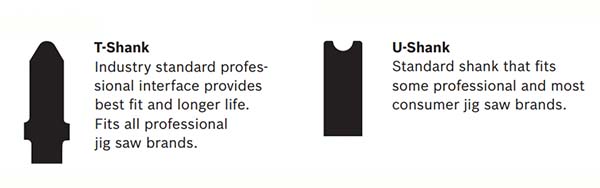
■T-Shank
T-shank blades are the industry standard and fit most modern jigsaws from brands such as Bosch, Makita, DeWalt, and Milwaukee. They feature a tool-free quick-release design for fast and secure blade changes.
■U-Shank
U-shank blades are mainly found on older jigsaw models. They require a screw or clamp to hold the blade in place, so a wrench or screwdriver is usually needed for blade replacement.
Quick Tip: If your jigsaw allows tool-free blade changes, it almost certainly uses T-shank blades. If you need to loosen a screw, it most likely uses U-shank blades.
Step 2: Choose the Right Blade Material
The blade material determines what it can cut and how long it will last.
| What You're Cutting | Recommended Blade Material |
|---|---|
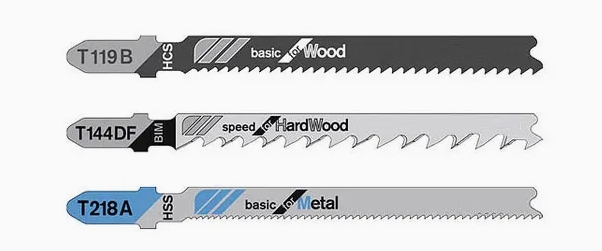
| Wood, plywood, MDF, plastic, rubber | HCS (High Carbon Steel) – flexible and economical, ideal for soft materials. |
| Thin metal, aluminium, copper, sheet steel | HSS (High Speed Steel) – harder than HCS with better heat resistance for metal cutting. |
| Wood with nails, or mixed materials | Bi-Metal (BiM) – combines HSS teeth with a flexible alloy steel body for longer blade life and improved durability. |
Step 3: Choose the Right Tooth Type
The tooth design determines cutting performance, speed, and finish quality. Below are the most common tooth types available.
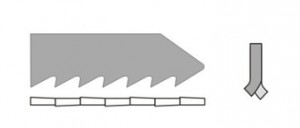
•Milled and side set teeth
Best for medium rough cuts and quick work in hard/soft wood, aluminium, synthetic materials, and non-ferrous metals

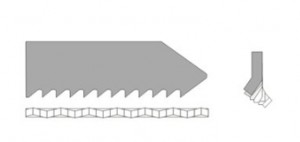
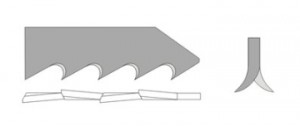
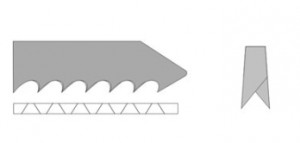
•Milled and wavy set teeth
Best for fine, straight cuts in plywood, low carbon (soft) steel, aluminium, non-ferrous metals, and synthetic materials
•Ground and side set teeth
Best for clean, quick cuts in wood or plastic
•Ground and taper ground teeth
Best for precise, fine, and neat cuts in wood and plastic
Step 4: Choose the Right TPI
TPI stands for Teeth Per Inch – the number of teeth within one inch of the blade.
For most applications, these three ranges are all you need:
| TPI Range | Best For |
|---|---|
| 6–10 TPI | Fast cutting in thick wood |
| 10–14 TPI | General-purpose cutting in wood and plastic |
| 17–24 TPI | Smooth cutting in thin metal and sheet materials |
Simple Rule:
•Lower TPI = Faster cutting, rougher finish
•Higher TPI = Slower cutting, smoother finish
Step 5: Know the Most Common Blade Models
Many T-shank jigsaw blades use standardized model numbers. While specifications may vary slightly between manufacturers, these are among the most common blade models you'll find on the market.
| Blade Model | Best For |
|---|---|
| T101B | Clean, precise cuts in softwood, plywood, MDF, and laminated boards |
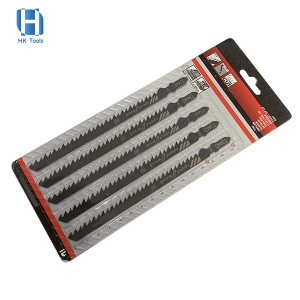
| T144D | Fast cutting in softwood and construction timber |
| T244D | Curved cuts and intricate shapes in wood |
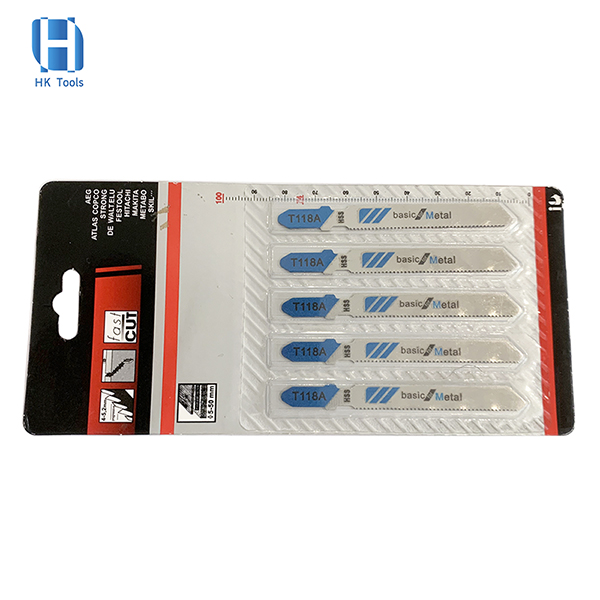
| T118B | General-purpose cutting of sheet metal, mild steel, and aluminium |
A Few Extra Tips
▪Choose a blade that is slightly longer than the thickness of your material.
▪When cutting metal, reduce the feed pressure and use cutting oil or lubricant whenever possible to extend blade life.
▪Replace the blade once cutting becomes slower, rougher, or requires excessive force.
▪Always make sure the blade matches your jigsaw's shank type before use.
Conclusion
Choosing the right jigsaw blade is easier than it looks. By following these simple steps, you can quickly select the best blade for your application and achieve cleaner cuts, better cutting performance, and longer blade life.
Whether you're working with wood, plastic, or metal, selecting the right blade will make every project safer, faster, and more efficient.

Post time: Jul-17-2026


