



Philips Head Bit Sizes: PH1 vs. PH2 vs. PH3 – How to Choose the Right One
If you’ve ever struggled with a slipping screwdriver or a stripped screw, the problem might not be your technique—it could be the wrong Philips head bit. These tiny tools are labeled with “PH” followed by a number, and that number determines whether your project goes smoothly or turns into a headache. In this guide, we’ll break down the most common sizes (PH1, PH2, PH3) so you can pick the right bit every time.
The Key Principle: Match Bit Size to Screw Size
The most important rule when using Philips bits is simple: the higher the PH number, the thicker and blunter the bit. This directly corresponds to the size of the screw it’s designed for.
▶A small, sharp bit won’t grip a large screw (and may break).
▷A thick, blunt bit won’t fit into a small screw slot (and may strip the head).
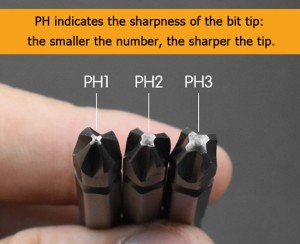
PH1: Small Job Specialist
PH1 has a moderately sharp, narrow tip, perfect for screws 2–4mm in diameter. Use it for:
▪Small electronics (hair dryers, toys, etc.)
▪Lightweight furniture hardware
▪Small appliance repairs
PH1 is precise but not designed for high torque. Push it too hard, and the bit might bend or snap.
PH2: The All-Around Workhorse
PH2 is the most commonly used bit and a must-have in any toolbox. Its balanced thickness and bluntness fit 4–6mm screws, which cover most everyday tasks:
▪Assembling furniture
▪Fixing kitchen appliances
▪Tightening car interior panels
▪Installing light fixtures
If you only buy one Philips bit, make it PH2—you’ll use it more than any other.
PH3: Heavy-Duty Hero
PH3 is thick and blunt, designed for screws 6mm and larger. It’s ideal for:
▪Industrial tasks
▪Securing heavy machinery
▪Assembling steel structures
▪Working on car chassis
Using PH3 on small screws is not recommended—it won’t fit. But for big, tough jobs, PH3 prevents stripped screws and broken bits.
Common Mistakes to Avoid
The biggest mistake is grabbing a bit that’s "close enough" rather than the correct size:
▪PH1 on a large screw → strips the head
▪PH3 on a small screw → slips and damages the slot
Tip: Keep PH1 for small jobs, PH2 for everyday tasks, and PH3 for heavy-duty work.
Conclusion
Choosing the right Philips bit size isn’t just about convenience—it protects your tools, your screws, and your sanity. Whether you’re a DIYer or a professional, knowing which bit to use can save you time, effort, and frustration.
Post time: Nov-28-2025


