



Reduced Shank Drill Bits: How to Drill Large Holes with a Small Chuck
If your drill press only accepts a 1/2-inch shank, drilling a 1-inch hole may seem impossible. A reduced shank drill bit makes this possible by combining a larger cutting diameter with a smaller shank, allowing it to fit into a chuck with limited capacity.
This design is especially useful when you need to drill larger holes without changing machines. However, a reduced shank drill bit is primarily a solution for chuck compatibility. Its smaller shank can limit torque transmission under heavy loads, so it is important to consider the machine, workpiece material, and drilling conditions before choosing one.
What Is an HSS Reduced Shank Drill Bit?
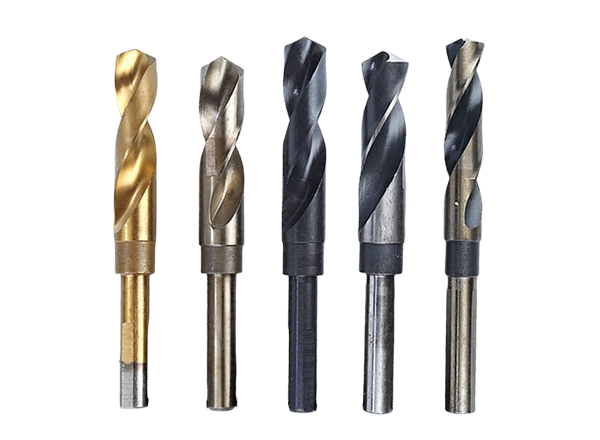
An HSS reduced shank drill bit is a twist drill designed with a shank diameter smaller than its cutting diameter. The shank is the smooth part held by the drill chuck; the fluted body is the part that cuts the hole. For example, a bit with a 25 mm cutting diameter and a 13 mm shank can fit into a chuck that accepts a maximum shank diameter of 13 mm. These bits are common in metalworking, machinery maintenance, fabrication, and general workshop use—anywhere a larger hole is needed without switching to a bigger chuck or machine. They are available in a range of cutting diameters, shank sizes, lengths, and material grades to suit different drilling requirements.
Why Use a Reduced Shank Drill Bit?
The main reason is chuck capacity.
A typical hand drill or drill press may have a chuck capacity of 10 mm, 13 mm, or 1/2 inch. Some workshops need to drill larger holes while continuing to use equipment with these chuck capacities.
A conventional straight shank bit generally has a shank diameter that matches its cutting diameter. Once the required drill diameter exceeds the chuck's capacity, the bit cannot be mounted directly. At that point, there are three common options:
▪Use a machine or chuck with a larger capacity.
▪Use a taper shank drill bit with a compatible spindle or socket.
▪Use a reduced shank drill bit that fits the existing chuck.
A reduced shank bit is a practical choice when the machine has enough power and capacity for the hole, but the chuck cannot hold a full-diameter shank. It is not a performance upgrade; it is a fit upgrade.
Key Features of HSS Reduced Shank Drill Bits
Reduced Shank Design
The defining feature is a shank diameter smaller than the cutting diameter. This lets larger-diameter drills fit into standard chucks—10 mm, 13 mm, or 1/2 inch, depending on the shank specification.
The design improves mounting compatibility, not drilling performance. The machine must still have enough power and torque for the cutting diameter and workpiece material.
High Speed Steel Construction
HSS reduced shank bits are commonly made from high-speed steel, offering a balance of hardness, toughness, and heat resistance.
▪HSS M2: A general-purpose high-speed steel with a good balance of hardness, toughness, and wear resistance. It is widely used for general workshop metal drilling.
▪HSS M35: Contains approximately 5% cobalt, with improved hot hardness and heat resistance compared with M2. It is often selected for stainless steel and other difficult-to-machine materials.
Choose the grade according to workpiece material, cutting conditions, and required tool life. M35 is not automatically better for every application. The right grade depends on the material being drilled and the operating conditions.
Twist Flute Design
The spiral flutes lift chips out of the hole and allow cutting fluid to reach the cutting edges. Chip evacuation matters more as diameter and depth increase, because packed chips raise cutting resistance, generate extra heat, and can affect hole quality.
Shank Styles
Reduced shank bits are commonly available in two shank styles:
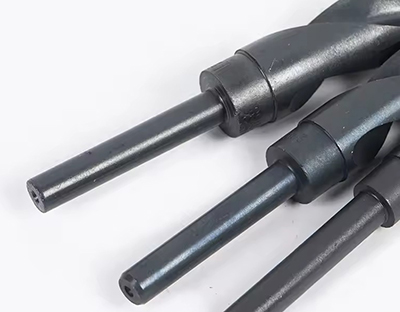
▪Round Shank: A cylindrical shank held by chuck clamping pressure. The most common style for standard drill chucks.
▪3-Flat Shank: Three ground flats on the shank to improve grip and reduce slipping.
The right choice depends on your chuck condition and clamping requirements. A 3-flat shank helps, but clean chuck jaws and proper tightening are still essential.

Silver & Deming Drill Bits: A Common Reduced Shank Design
Silver & Deming (S&D) bits are among the most recognized reduced shank drills, particularly in the North American market. They typically use a 1/2-inch (12.7 mm) shank, letting larger cutting diameters fit standard 1/2-inch chucks.
| Specification | Typical size |
|---|---|
| Shank diameter | 1/2 inch (12.7 mm) |
| Cutting diameter | Commonly 9/16–1-1/2 inch |
| Overall length | Approximately 6 inches (152.4 mm) |
| Flute length | Approximately 3 inches (76.2 mm) |
| Point angle | 118° or 135° split point |
These are common examples, not universal specifications. Actual dimensions vary by manufacturer and product series.
It is also important to note that not every reduced shank drill is a Silver & Deming drill. Other designs use different shank diameters, such as 3/8 inch, 10 mm, 13 mm, or other metric and imperial sizes.
Specifications to Check Before Choosing
Cutting Diameter:The cutting diameter determines the hole size produced. Reduced shank bits are often used for larger holes that exceed the chuck capacity available for conventional straight shank drills.
Shank Diameter:The shank diameter must be compatible with the chuck's clamping range. A 13 mm shank requires a suitable 13 mm chuck; a 1/2-inch shank is standard for Silver & Deming bits.Always check the actual chuck capacity—not just its nominal size—and confirm the shank is securely clamped.
Flute Length and Overall Length
▪Flute Length: The spiral-fluted section. It affects the available cutting depth and provides space for chip evacuation.
▪Overall Length: The total length from the drill point to the end of the shank.
Many standard S&D bits are approximately 6 inches long overall, with a 3-inch flute length. Other reduced shank series may have different dimensions. Longer bits provide more reach, but excessive length can reduce rigidity and increase vibration.
Point Angle: 118° vs. 135° Split Point
▪118° Point: The traditional general-purpose geometry. It has a strong cutting point and is relatively simple to regrind by hand. It is a practical choice for general drilling and applications where the bit will be resharpened in-house.
▪135° Split Point: A split chisel edge helps the bit center more easily and reduces walking at startup. It is often preferred for metal drilling applications where easier centering and reduced walking at startup are important.
The better option depends on the workpiece material, drilling conditions, and user preference.
The Main Limitation: Torque Transmission
This is an important factor to consider when choosing a reduced shank drill bit.
A reduced shank bit is typically held by the friction between the drill chuck jaws and the shank surface. As the cutting diameter increases, the torque required for drilling can also increase. If the chuck cannot provide sufficient grip, the bit may slip during operation.
The design intentionally trades some torque capacity for chuck compatibility. The actual performance depends on the chuck type and condition, clamping force, cutting diameter, workpiece material, and drilling conditions.
Comparison of the three shank designs:
| Feature | Reduced Shank | Straight Shank | Taper Shank |
|---|---|---|---|
| Shank design | Smaller than cutting diameter | Usually matches cutting diameter | Conical shank |
| Mounting method | Drill chuck | Drill chuck | Taper socket or sleeve |
| Main advantage | Fits larger drills into smaller chucks | Simple, versatile mounting | Secure mounting and good torque transmission |
| Torque transmission | Depends on chuck grip; more limited under high loads | Depends on chuck grip; suitable for a range of general drilling conditions | Secure taper fit provides reliable torque transmission |
| Typical applications | Maintenance and general fabrication | General drilling operations | Industrial and heavy-duty drilling |
Reduced shank bits are a compatibility solution, not a heavy-duty replacement. For demanding applications requiring high torque and rigidity, a suitable taper shank drill may be a better option.
Common Applications
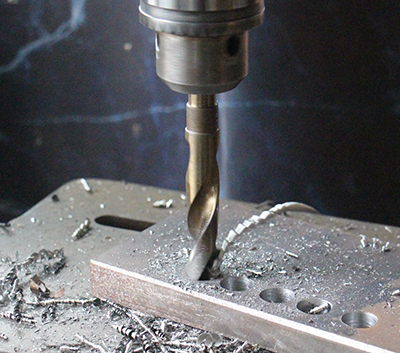
HSS reduced shank bits are used where larger holes must be drilled with standard chucks:
▪Metal Fabrication: Larger holes in steel plates, metal profiles, and structural components.
▪Machinery Manufacturing: Holes in machine parts and metal assemblies.
▪Automotive Maintenance: Drilling and repair work on metal components.
▪Industrial Maintenance: Repairing and modifying equipment and metal structures.
▪General Workshops: Larger holes with portable drills and drill presses.
Actual capability depends on bit specifications, machine power, workpiece material, and operating conditions.
How to Use Reduced Shank Drill Bits Safely
1. Select the correct cutting speed.
Larger diameters need lower spindle speeds. Match the speed to the workpiece material, drill diameter, and HSS grade. Running too fast concentrates heat at the cutting edge and shortens tool life.
2. Secure the workpiece.
Large-diameter drilling generates considerable torque. Clamp the workpiece securely to prevent it from rotating or moving during drilling.
3. Check the drill chuck.
Make sure the chuck jaws are clean and in good condition, and that the shank is centered and firmly clamped. Worn chuck jaws or insufficient tightening can increase the risk of slipping.
4. Use cutting fluid when required.
Appropriate cutting fluid reduces heat and friction, particularly when drilling steel and stainless steel. Avoid allowing the bit to rub against the workpiece without cutting.
5. Control feed pressure and chip removal.
Apply a suitable feed rate without forcing the drill. Clear accumulated chips, especially when drilling deeper holes. If the bit stops cutting, check the speed and chip evacuation before applying more pressure.
6. Consider pilot drilling.
For some large-diameter drilling operations, a properly sized pilot hole can help with positioning and reduce the initial cutting load. Select the pilot hole size according to the drill geometry and application.
Sourcing HSS Reduced Shank Drill Bits
HKTools supplies HSS reduced shank drill bits for metalworking and industrial applications, with options across cutting diameters, shank dimensions, material grades, and point configurations. With our own drill bit manufacturing workshop and long-term manufacturing partners, we focus on stable product quality and reliable supply.
If you are sourcing reduced shank drill bits for resale or industrial use, send us your required dimensions and material specifications. We can confirm suitable options and provide a quotation.


Post time: Oct-30-2026


