



Shank Types of Annular Cutters: What You Need to Know
Annular cutters, also known as steel hole cutters or core drills, are widely used with magnetic drills and bench drills to create precise holes in steel, stainless steel, and other metals. Unlike standard twist drills, annular cutters only remove the material around the edge of the hole, making drilling faster and more efficient. While most users focus on cutter diameter and material, the shank type is equally important because it determines how the cutter fits the drill, transfers torque, and maintains stability during operation.
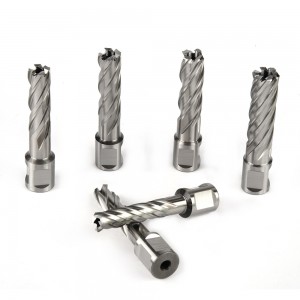
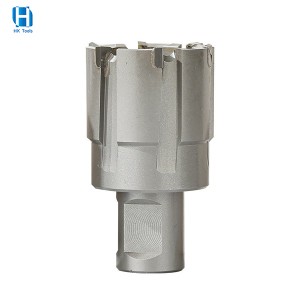
The most common shank type is the Weldon shank. This shank features a round body with two flat surfaces, allowing the drill’s set screw to securely lock the cutter in place. Weldon shanks are highly reliable, preventing slippage under high torque, and are the standard for most industrial magnetic drills. They are available in typical sizes such as 19mm (3/4") for standard hole diameters and 32mm (1-1/4") for larger, heavy-duty applications.
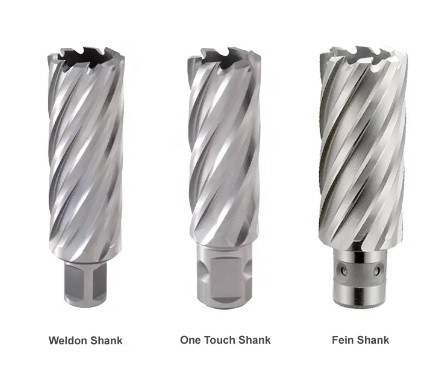
Another widely used option is the universal quick-change shank. These cutters often include a spring-loaded ball or notch system that allows for tool-free installation and removal. Quick-change shanks are especially useful in field applications or situations where multiple hole diameters are used frequently. They are generally compatible with multiple drill brands, making them versatile for everyday workshop use.
Some manufacturers, such as FEIN, offer proprietary shank systems like the FEIN Quick‑IN. These shanks are designed specifically for FEIN magnetic drills, enabling fast and secure tool changes without set screws. While convenient, FEIN shanks are brand-specific and should only be purchased for compatible drills.
In summary, when selecting an annular cutter, start by checking your drill’s shank compatibility. Weldon shanks are the industry standard and suitable for most applications, universal quick-change shanks offer convenience and flexibility, and brand-specific shanks like FEIN’s Quick‑IN can further improve efficiency if you use the matching equipment. Choosing the right shank ensures safer operation, better performance, and longer tool life.
Post time: Feb-06-2026


