



The Complete Guide to Carbide Burrs: Types, Applications, and Selection Tips
In modern metalworking, precision finishing tools are the backbone of productivity and surface quality. Among these essential tools, carbide burrs—also known as carbide rotary files or tungsten carbide burrs—stand out as indispensable for fabrication, welding, mold making, automotive repair, aerospace manufacturing, and industrial maintenance.
But with so many shapes, cut styles, and applications available, how do you choose the right one? This guide breaks down everything B2B buyers and tool distributors need to know about carbide burrs.
■What Are Carbide Burrs?
Carbide burrs are rotary cutting tools designed for use with die grinders, rotary tools, and pneumatic grinders. They are used for shaping, grinding, deburring, enlarging holes, and removing sharp edges from metals and other hard materials.
Compared to traditional metal files, carbide burrs offer:
▪Faster cutting speeds
▪Longer service life
▪Higher precision
▪Better performance on hardened metals
▪Improved efficiency in mass production
Common applications include working with steel, stainless steel, cast iron, aluminum, copper, titanium, weld seams, and hardened alloys.
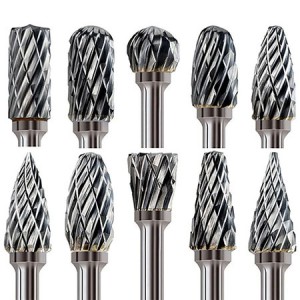
■Why Carbide Burrs Matter in Industrial Applications
Increased Productivity – Carbide burrs remove material significantly faster than hand-operated files, reducing labor time and boosting throughput.
Precision Finishing – The rotary cutting action allows operators to achieve precise contours, smooth edges, and detailed finishing work.
Long Tool Life – High-quality tungsten carbide burrs offer exceptional wear resistance, making them cost-effective for industrial operations.
Versatility – With different shapes and cut patterns, carbide burrs serve multiple industries and applications.
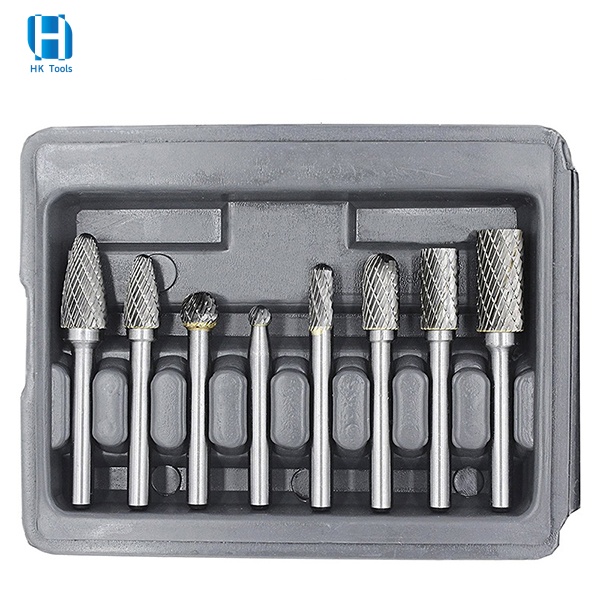
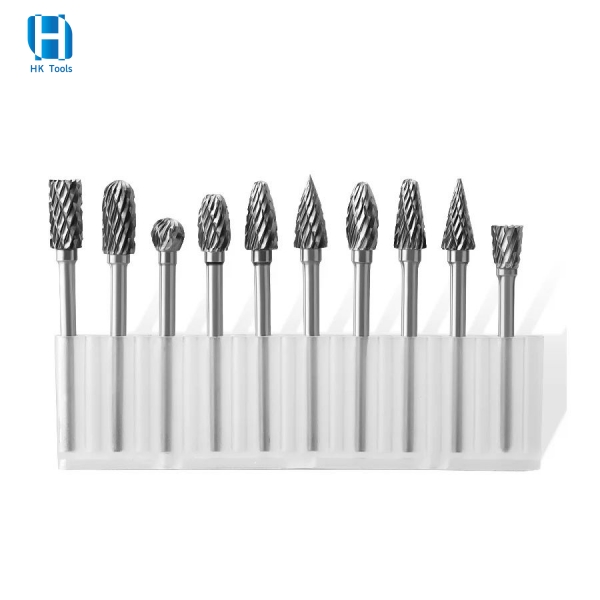
■Main Types of Carbide Burrs by Shape
Choosing the correct burr shape is critical for the job at hand.
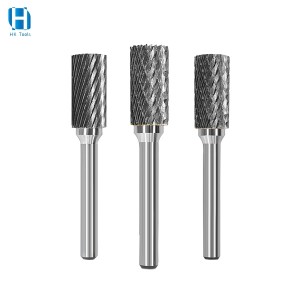
Cylindrical Carbide Burrs
End Cut Cylindrical Burrs – Feature cutting edges on both the side and end surfaces. Best for slotting, contour shaping, surface grinding, and weld removal. Used in automotive, fabrication, and aerospace.
Plain End Cylindrical Burrs – Designed mainly for side cutting. Ideal for flat surface finishing, edge deburring, and material removal on large surfaces.
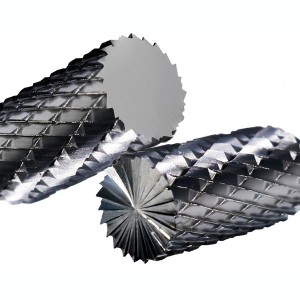
Ball Shape Carbide Burrs
Ball burrs excel at creating concave cuts and rounded profiles. Common uses include engraving, radius shaping, mold cavity work, and artistic metalworking. They offer excellent maneuverability, smooth curved finishing, and precision detailing.
Tree Shape Carbide Burrs
Pointed Tree Burrs – Useful for accessing tight corners and angled surfaces. Suitable for weld dressing, internal contouring, and die making.
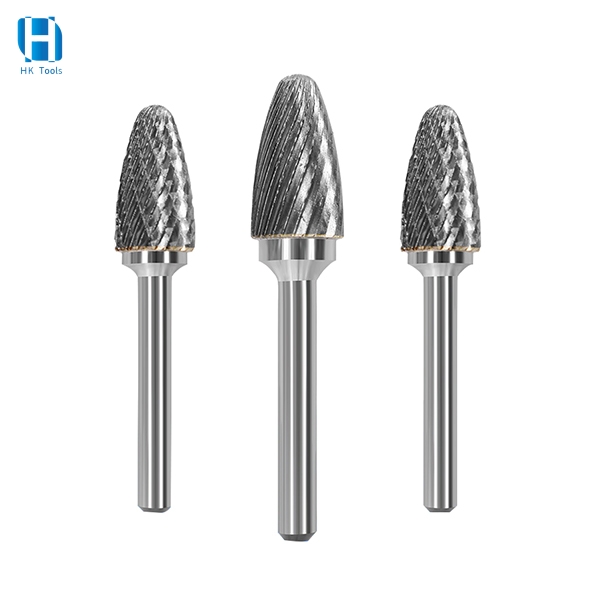
Radius End Tree Burrs – Provide smoother transitions and reduced marking. Recommended for rounded edge finishing and curved surface blending.
Flame Shape Carbide Burrs
Ideal for contour work and rounded edge applications. Popular for mold polishing, chamfering, and deburring curved surfaces. Key benefits include easy control, smooth finishing, and excellent access to narrow spaces.
Cone Shape Carbide Burrs
Frequently used for beveling and chamfering operations. Typical uses include countersinking, hole deburring, and V-groove preparation. Common in sheet metal fabrication, machinery repair, and tool manufacturing.
Oval Carbide Burrs
Highly versatile tools for curved surface finishing. Best for surface blending, weld removal, and smoothing irregular surfaces. Advantages include smooth cutting action, reduced vibration, and improved operator control.
Inverted Cone Carbide Burrs
Designed for back chamfering and reverse-angle work. Common uses include internal edge work, deburring inaccessible surfaces, and specialty machining.
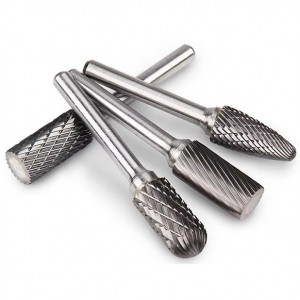
■How to Choose the Right Carbide Burr: A Buying Guide
Selecting the right burr comes down to a few practical factors. Here's what every B2B buyer should evaluate:
Industry & Application – Match the burr shape to the specific task: cylindrical for flat surfaces, ball for radii and concave cuts, tree for internal contours, flame for curved edges, cone for chamfering, and oval for weld blending. Knowing your customer's workpiece material (steel, aluminum, titanium, etc.) is the first step.
Shank Compatibility – Check the shank size. Common options include 1/4″, 1/8″, 6mm, and 3mm. Make sure the burr fits your customers' die grinders or rotary tools to avoid compatibility issues.
Material & Manufacturing Quality – Opt for high‑grade tungsten carbide with precision CNC grinding. This ensures better wear resistance, reduced vibration, balanced rotation, and consistent cutting performance. Cheap materials often lead to premature failure.
■Final Thoughts
Understanding the different types of carbide burrs is essential for tool distributors, wholesalers, and industrial buyers looking to supply high-performance metalworking solutions. From cylindrical and tree-shaped burrs to flame and ball profiles, every carbide burr serves a unique industrial purpose. Selecting the correct shape, cut type, and carbide quality directly affects productivity, finish quality, and operational efficiency.
For distributors serving fabrication shops, aerospace manufacturers, automotive suppliers, and metalworking industries, carbide burrs remain one of the most important product categories. Partnering with a reliable manufacturer ensures consistent quality, stable supply, and long-term competitiveness in the industrial tools market.
Post time: Jun-26-2026


