



Which Diamond Saw Blade Is Best for Cutting Granite?
Granite is a hard, dense natural stone used for countertops, floor tiles, wall cladding, paving, and other construction applications. Its mineral composition makes it challenging to cut efficiently, especially when consistent cutting performance and clean edges are required.
Choosing the right diamond saw blade for granite involves more than diamond concentration. Blade design, bond formulation, cutting method, machine compatibility, and the required edge finish all influence cutting speed, service life, and overall performance.
So, which diamond saw blade is best for cutting granite?
There is no single blade type for every application. Segmented, turbo, and continuous-rim diamond blades each offer different advantages. The best choice depends on the cutting task, equipment, and desired finish.
Why Granite Requires the Right Diamond Blade
Granite typically ranks around 6–7 on the Mohs hardness scale. Its quartz content also contributes to its abrasive characteristics. Using an unsuitable diamond blade can result in slow cutting, excessive wear, overheating, or edge chipping.
Three factors are particularly important when selecting a blade.
▪Diamond quality and concentration. Diamond particles perform the cutting. Their quality, size, and concentration influence cutting efficiency and wear resistance. However, a higher diamond concentration does not automatically mean better performance. The diamond specification must be matched to the bond and the intended application.
▪Bond hardness. The metal bond holds the diamond particles in place. During cutting, the bond must wear at an appropriate rate to expose fresh diamond particles. A bond that wears too quickly can shorten blade life, while an excessively hard bond may become glazed and reduce cutting efficiency.
▪Blade design. The rim structure affects cutting behavior, debris removal, cooling, and edge finish. Selecting the appropriate design is an important first step when choosing a diamond blade for granite.
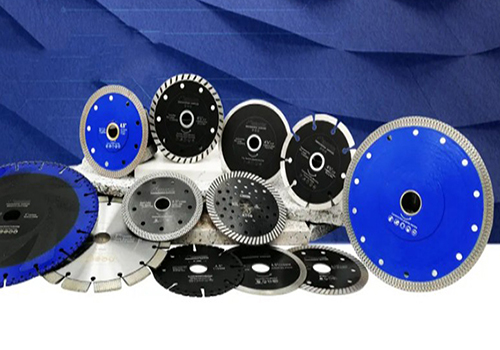
Segmented vs. Turbo vs. Continuous-Rim Diamond Blades
The three main blade designs serve different cutting requirements. The following comparison provides a general guide.
| Blade Type | Typical Advantage | Typical Applications | Main Consideration |
|---|---|---|---|
| Segmented | Efficient cutting and debris clearance | General stone cutting and rough cutting | May produce more edge chipping |
| Turbo | Balance between cutting speed and edge quality | General-purpose stone cutting | Performance depends on rim design and specification |
| Continuous rim | Cleaner cuts with a suitable blade | Precision cutting and applications requiring smoother edges | Cooling and cutting-method requirements vary by design |
Actual performance depends on the blade specification, granite characteristics, machine, and operating conditions.
Segmented Diamond Blades
Segmented diamond blades feature separate cutting segments with gaps around the rim. These gaps help remove debris and dissipate heat during cutting.
They are commonly used for construction work, general stone cutting, and applications where cutting efficiency is a priority.
A segmented blade is a practical option for rough cutting and other tasks where productivity matters more than achieving a smooth edge directly from the cut. However, the cut may require additional finishing, particularly when the edge will remain visible.
When selecting a segmented blade for granite, check that its diamond and bond specifications are suitable for the stone and the intended cutting conditions.

Turbo Diamond Blades
Turbo diamond blades feature a serrated or ridged rim. This rim geometry is intended to support cutting efficiency and debris removal while offering a balance between cutting speed and edge quality.
They can be suitable for general-purpose granite cutting, including certain construction and stone-processing applications.
However, not all turbo blades offer the same performance. Rim geometry, diamond specification, bond formulation, and the intended cutting method all affect the result. Choose a blade specifically rated for granite rather than assuming that every turbo blade is suitable for hard natural stone.

Continuous-Rim Diamond Blades
Continuous-rim diamond blades have an uninterrupted cutting edge. They are commonly selected for applications where a cleaner cut and reduced edge chipping are important.
With a suitable blade and stable cutting setup, this design can produce a smoother edge than a more aggressive segmented blade. It may therefore be appropriate for precision cutting and selected thin-stone applications.
Continuous-rim blades are not all designed for the same cutting conditions. Some require water cooling, while others are rated for dry cutting. Always follow the manufacturer’s instructions, particularly when cutting hard granite, to avoid overheating and premature blade wear.

Which Diamond Blade Is Best for Different Granite-Cutting Applications?
The best blade depends on what you need to achieve.
Rough cutting and material removal
For rough cutting and applications where cutting efficiency is the main priority, a suitable segmented blade is often a practical starting point. Its segment gaps help clear cutting debris, while the blade specification determines its suitability for the granite and operating conditions.
General-purpose granite cutting
A granite-rated turbo blade can be a useful option when you need a balance between cutting speed and edge quality. It may suit a variety of general cutting tasks, provided the blade is compatible with the machine and cutting method.
Clean edges and precision cutting
When edge quality is a priority, consider a suitable continuous-rim blade or a turbo blade designed for a cleaner finish. The final result depends on the blade, granite thickness, machine stability, and cutting technique.
Different cutting equipment
Blade diameter must match the machine, required cutting depth, guard clearance, and arbor specifications. Handheld angle grinders, tile cutters, and professional stone saws operate under different conditions and require compatible blades.
Always verify the blade’s maximum rated RPM against the equipment specifications. Never exceed the blade’s marked speed limit.
Wet Cutting vs. Dry Cutting Granite
The cutting method is another important consideration when choosing a diamond saw blade for granite.
Wet Cutting
Wet cutting supplies water to the cutting area to help manage heat and control airborne dust. When the blade and equipment are designed for wet operation, adequate water supply can help maintain cutting performance and reduce the risk of overheating.
Wet cutting is commonly used in professional stone processing, particularly for applications involving sustained cutting or stricter dust-control requirements.
The water supply must be appropriate for the blade and machine. Insufficient cooling can still cause overheating, even when water is being used.
Dry Cutting
Dry cutting can be convenient for certain on-site applications where water is unavailable. However, heat and dust require careful management, particularly when cutting hard granite.
Use only a blade specifically rated for dry cutting. Follow the manufacturer’s operating instructions, avoid excessive feed pressure, and allow cooling intervals when required.
Appropriate dust extraction and respiratory protection are also important. Never use a wet-only blade for dry cutting.
Key Factors to Check Before Buying a Granite Diamond Blade
Before purchasing a diamond saw blade, check the following specifications to ensure that it suits your application.
▪Blade diameter and cutting depth:Choose a diameter compatible with the machine and sufficient for the required cutting depth. A larger blade does not automatically provide better performance; machine compatibility and the intended application must come first.
▪Maximum RPM:Check the maximum RPM marked on the blade and ensure that it is compatible with the machine. Never exceed the blade’s rated speed or modify the equipment to accommodate an unsuitable blade.
▪Diamond and bond specification:Granite requires a blade specification suited to its hardness and abrasive characteristics. The diamond and bond must work together to maintain cutting efficiency and expose fresh diamond particles at an appropriate rate.
▪Wet or dry cutting compatibility:Confirm whether the blade is designed for wet cutting, dry cutting, or both. Using the wrong cutting method can lead to overheating, reduced service life, or blade damage.
▪Machine and mounting condition:The arbor, flange, and mounting surfaces must be clean and compatible with the blade. Damaged components or incorrect mounting can cause vibration, uneven wear, and poor cutting results.
Common Granite-Cutting Problems and How to Avoid Them
Even a suitable diamond blade may perform poorly if the operating conditions are incorrect.
Edge chipping: Excessive feed pressure, machine vibration, poor workpiece support, or an unsuitable blade design can contribute to chipping. Select a blade appropriate for the required finish and keep the workpiece stable.
Slow cutting: A blade may cut slowly because of an unsuitable bond, glazing, insufficient machine power, or incorrect operating conditions. Check the blade specification and follow the manufacturer’s guidance on restoring cutting performance, if applicable.
Overheating: Insufficient cooling, excessive pressure, or using a blade outside its intended application can cause overheating. Verify the cutting method, water supply where required, and operating conditions before continuing.
Abnormal vibration: Stop the machine if the blade vibrates excessively. Check for blade damage, incorrect mounting, worn flanges, or other equipment problems. Do not continue using a damaged blade.
Conclusion
The best diamond saw blade for granite depends on the cutting task, equipment, and required finish.
Segmented blades are practical for many general stone-cutting applications where cutting efficiency is important. Turbo blades can provide a balance between cutting speed and edge quality. Continuous-rim blades are worth considering when a cleaner cut is required and the blade is suitable for the material and cutting conditions.
Before choosing a blade, check its granite-cutting suitability, diamond and bond specification, diameter, maximum RPM, and wet or dry cutting rating. Matching these factors to your application is more reliable than choosing a blade based on appearance or diamond concentration alone.
For professional buyers and distributors, confirming the intended application and machine specifications before placing an order can help ensure that the selected diamond saw blade meets the required cutting and production needs.


Post time: Oct-23-2026


