



Carbide End Mill Coatings: Types, Benefits and How to Choose
When selecting a carbide end mill, coating is an important factor to consider alongside the carbide substrate, tool geometry, flute count, and cutting parameters.
A suitable coating can improve wear resistance, reduce friction and material adhesion, and protect the cutting edge under demanding machining conditions. However, different coatings are designed for different applications. A coating suitable for hardened steel may not be the right choice for aluminum or other nonferrous materials.
Understanding the characteristics and typical applications of different coatings can help you select a carbide end mill that better matches your workpiece material and machining conditions.
What Is a Carbide End Mill Coating?
A carbide end mill coating is a thin protective layer deposited onto the surface of a cutting tool. Many common cutting tool coatings are applied using Physical Vapor Deposition (PVD).
The carbide substrate provides the cutting edge with strength, rigidity, and resistance to mechanical stress, while the coating modifies the surface properties of the tool.
Depending on the coating type, it can provide:
▪Higher wear resistance
▪Better thermal stability
▪Improved oxidation resistance
▪Reduced friction
▪Better resistance to material adhesion
▪Longer and more consistent tool life
Coating is only one part of end mill performance. The carbide grade, cutting edge geometry, tool diameter, flute design, workpiece material, cutting speed, feed rate, coolant, and machine rigidity all affect the final machining result.
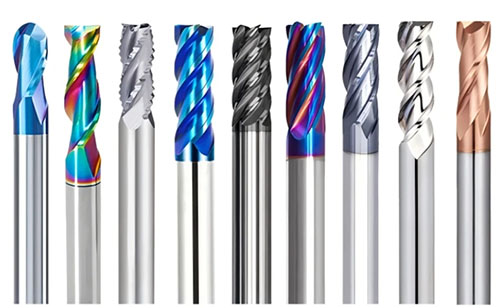
How Do Coatings Improve End Mill Performance?
Enhanced Wear Resistance
During milling, the cutting edge is continuously exposed to mechanical contact, abrasion, and cutting forces. Over time, this can cause flank wear, edge wear, or chipping.
A suitable coating can provide a harder and more wear-resistant surface, helping the cutting edge maintain its condition for longer. This can reduce tool changes and help maintain more consistent machining performance.
Thermal and Oxidation Resistance
High-speed milling can generate significant heat, especially when machining steel, stainless steel, hardened materials, and other difficult-to-machine materials.
Some advanced coatings are designed to maintain their properties at elevated temperatures and provide improved oxidation resistance. This is one reason coatings such as TiAlN, AlTiN, and TiSiN are commonly considered for high-speed and demanding machining applications.
Reduced Friction and Material Adhesion
Some workpiece materials, particularly aluminum and other nonferrous metals, can adhere to the cutting edge during machining.
Material adhesion can lead to built-up edge, unstable cutting, poor surface finish, and premature tool wear. Low-friction coatings such as DLC can help reduce adhesion and improve the interaction between the cutting tool and workpiece.
Common Carbide End Mill Coatings
TiN -- Titanium Nitride
TiN is one of the most established coatings used on cutting tools and is easily recognized by its gold-colored appearance.
It offers a practical combination of hardness, wear resistance, and general-purpose performance. TiN can be considered for conventional machining applications where cutting temperatures and wear requirements are moderate.
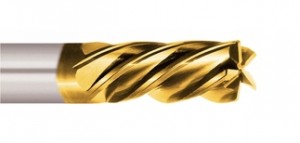
Typical applications:
▪General milling
▪Carbon steel and alloy steel
▪Low to moderate cutting speeds
▪Standard cutting operations
TiN remains a practical general-purpose option, while more advanced coatings may be considered for higher cutting temperatures or more demanding machining conditions.
TiCN — Titanium Carbonitride
TiCN is a titanium-based carbonitride coating known for its high hardness and good wear resistance.
Compared with TiN, the addition of carbon can provide higher hardness and improved resistance to abrasive wear in suitable applications.
Typical applications:
▪Steel
▪Cast iron
▪Abrasive workpieces
▪General milling
▪Applications requiring high wear resistance
TiCN is particularly relevant when hardness and resistance to abrasive wear are important. For applications dominated by high cutting temperatures, coatings with greater thermal stability may be more suitable.
TiAlN — Titanium Aluminum Nitride
TiAlN is an aluminum-containing coating developed for more demanding cutting conditions.
The addition of aluminum improves thermal and oxidation resistance compared with conventional TiN. At elevated temperatures, an aluminum-rich oxide layer can help protect the coating against further oxidation.
Typical applications:
▪Carbon and alloy steel
▪Stainless steel
▪Tool steel
▪Hardened materials
▪High-speed machining
▪Dry or reduced-coolant machining
TiAlN is a common choice for applications where heat generation and tool wear are important concerns.
AlTiN — Aluminum Titanium Nitride
AlTiN is another aluminum-rich nitride coating widely used on carbide cutting tools.
Its thermal stability, oxidation resistance, and wear resistance make it suitable for demanding machining conditions where the cutting edge is exposed to higher temperatures.
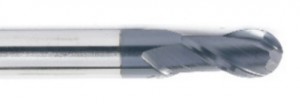
Typical applications:
▪Hardened steel
▪Tool steel
▪Stainless steel
▪High-speed milling
▪Dry machining
▪Difficult-to-machine materials
TiAlN and AlTiN are closely related coating families, but their composition and performance can vary depending on the coating formulation and deposition technology. They should not be treated as exactly the same coating.
TiSiN — Titanium Silicon Nitride
TiSiN is a silicon-containing nitride coating designed to provide high hardness, wear resistance, and thermal stability.
It can be considered for demanding machining applications where both wear resistance and high-temperature performance are important.
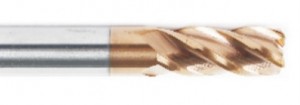
Typical applications:
▪Hardened steel
▪Tool steel
▪Stainless steel
▪High-speed machining
▪Applications requiring high wear resistance
The actual performance of TiSiN depends on its coating structure and deposition process, so the specific coating specification should be considered when comparing different tools.
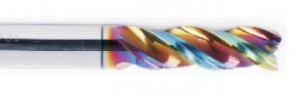
DLC — Diamond-Like Carbon
DLC, or Diamond-Like Carbon, is different from conventional metal-nitride coatings.
One of its main characteristics is low friction and strong anti-adhesion performance. This makes DLC particularly suitable for applications involving aluminum and other nonferrous materials where material buildup on the cutting edge can be a concern.
Typical applications:
▪Aluminum alloys
▪Copper and other nonferrous materials
▪Plastics
▪Composite materials
▪Applications where low friction and anti-adhesion are important
DLC is not simply a universal high-hardness coating. Its main advantages are related to friction, adhesion, and the specific properties of the DLC coating system.
Nano and Nanocomposite Coatings
“Nano coating” is a broad term covering different nanostructured and nanocomposite coating technologies.
Depending on the formulation and deposition process, these coatings can be designed to improve hardness, wear resistance, and thermal stability. When comparing nano-coated end mills, check the specific coating specification rather than relying on the “Nano” label alone.
How to Choose the Right Coating for Different Materials
There is no universal coating for every machining application. Start with the workpiece material, then consider the cutting conditions and complete tool design.
Aluminum and Other Nonferrous Materials
Aluminum and other nonferrous materials can adhere to cutting edges when tooling and cutting parameters are not properly matched.
For these materials, DLC can be considered when low friction and anti-adhesion performance are important.
Sharp cutting edges, suitable flute geometry, and efficient chip evacuation are also important for aluminum machining.
Carbon Steel and Alloy Steel
For general steel milling, TiN, TiCN, TiAlN, and AlTiN can be considered depending on the cutting conditions.
TiN is suitable for many conventional applications, while TiAlN or AlTiN may be considered when cutting speed and temperature increase.
Stainless Steel
Stainless steel can generate significant heat during machining and may also cause material adhesion or work hardening.
TiAlN, AlTiN, and TiSiN can be considered when thermal stability and wear resistance are important, depending on the stainless steel grade and machining conditions.
Hardened Steel
Machining hardened steel exposes the cutting edge to higher mechanical and thermal loads.
AlTiN, TiAlN, and TiSiN can be considered for demanding applications, particularly when high-speed or dry machining is involved.
Workpiece hardness, cutting speed, tool overhang, and machine rigidity should also be considered.
Coating Color: Can It Identify the Coating?
Coating color can provide a quick visual reference, but it should not be used as the only method of identification.
TiN is commonly recognized by its gold-colored appearance, while other coatings may appear black, gray, bronze, blue-gray, or violet depending on their composition and manufacturing process.
Different coating systems can have similar colors, so the actual coating specification should be confirmed with the manufacturer or supplier when it matters.
Common Mistakes When Selecting an End Mill Coating
A more advanced or more expensive coating does not automatically mean better machining performance.
The coating should match the actual application. A low-friction coating designed for aluminum, for example, may not be suitable for high-temperature steel machining.
It is also important not to focus only on the coating. A carbide end mill should be considered as a combination of:
Carbide Substrate + Tool Geometry + Coating + Cutting Parameters
These factors work together to determine tool performance, machining stability, and service life.
Final Thoughts
Different carbide end mill coatings address different machining requirements. TiN and TiCN offer useful hardness and wear resistance for general applications, while TiAlN, AlTiN, and TiSiN are commonly considered for demanding, high-temperature machining. For aluminum and other nonferrous materials, DLC provides useful low-friction and anti-adhesion characteristics.
The right coating is not necessarily the hardest or most advanced option. It should match the workpiece material, machining conditions, tool geometry, and performance requirements.
When selecting a carbide end mill, consider the complete cutting tool rather than the coating alone.
Post time: Sep-24-2026


