



Drill Point Angles Explained: 118° vs 135° Drill Bits
What Is a Drill Point Angle?
The drill point angle refers to the angle formed at the tip of a drill bit where the cutting edges meet. It directly affects how the drill enters the material, cutting stability, chip removal, and final hole quality.
Among industrial drill bits, 118° and 135° are the two most commonly used point angles. Each is designed for different materials and working conditions, and choosing the right one can significantly improve drilling performance and tool life.
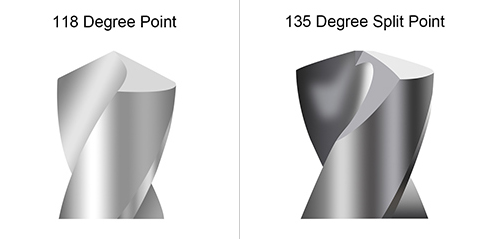
118° Drill Bits for General Purpose Drilling
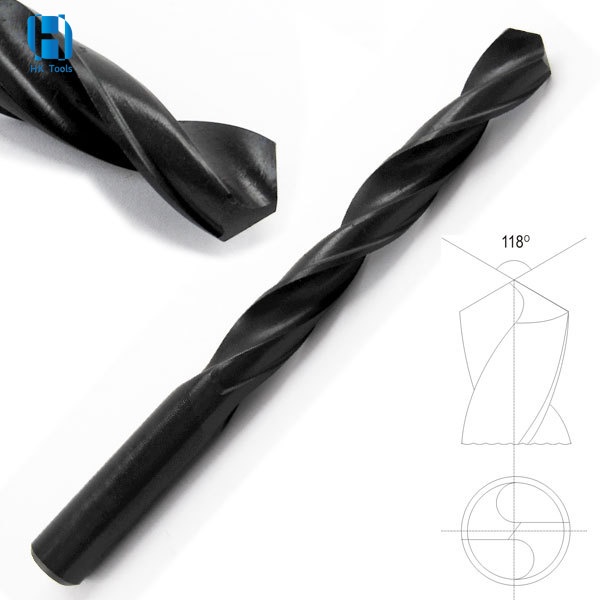
The 118° drill point angle is the standard design used on most general-purpose HSS drill bits. Its sharper tip allows faster penetration with lower cutting resistance, making it ideal for softer materials.
118° drill bits are commonly used for wood, plastic, aluminum, copper, and mild steel. They are widely applied in maintenance work, construction, and general workshop drilling.
Another advantage is ease of re-sharpening. In many workshops, 118° drill bits can be reground using standard grinding tools, helping reduce tooling costs and extend service life.
However, when drilling harder materials like stainless steel or alloy steel, 118° drill bits may tend to "walk" on the surface before cutting in. This can lead to inaccurate positioning, especially on smooth workpieces. In such cases, a center punch or pilot hole is usually required.
Why 135° Split Point Drill Bits Perform Better on Hard Metals
The 135° drill point angle is designed for tougher and more demanding drilling applications. Most 135° drill bits feature a split point design, which improves self-centering and reduces walking at startup.
This makes them especially suitable for stainless steel, hardened steel, and cast iron. Compared with 118°, the flatter angle distributes cutting forces more evenly, resulting in better stability and reduced drilling pressure.
In industrial use, 135° split point drill bits offer improved hole accuracy, less vibration, and longer tool life. They are commonly used in CNC machining, fabrication shops, and high-volume production environments where consistency is critical.
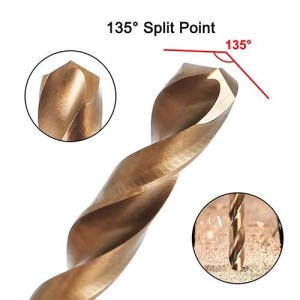
118° vs 135° Drill Bits: Key Differences
The main difference lies in application and performance under different materials.
118° drill bits are optimized for softer materials and general drilling tasks. They cut faster and are more cost-effective for everyday use.
135° split point drill bits are designed for harder metals and precision work. They provide better positioning, improved stability, and reduced risk of drill walking.
In soft materials, the performance difference is small. But in stainless steel or hardened metals, the 135° angle performs more reliably.
How to Choose the Right Drill Point Angle
Selection depends mainly on material type and required accuracy.
For general drilling in wood, plastic, and mild steel, 118° drill bits are usually sufficient and more economical.
For stainless steel, alloy steel, or precision industrial applications, 135° split point drill bits are the better choice due to their stability and self-centering performance.
Many professionals keep both types available to handle different machining needs efficiently.
Final Thoughts
The drill point angle is a critical factor in drilling performance. Whether using HSS, cobalt, or carbide drill bits, choosing the correct geometry improves efficiency, accuracy, and tool life.
118° remains ideal for general-purpose drilling, while 135° split point drill bits are preferred for harder materials and precision applications. Understanding this difference helps optimize both productivity and tooling cost in real-world machining operations.
Post time: May-09-2026


