



Form B vs. Form C Machine Taps: Understanding the Difference
When choosing a machine tap, you may come across designations such as Form B and Form C. These letters describe the geometry of the tap's chamfer and can affect its suitability for different tapping applications.
Form B is commonly associated with through-hole tapping, while Form C is often used for blind holes. Understanding the chamfer length and flute design helps explain why.
What Does "Form" Mean on a Machine Tap?
The form of a machine tap mainly refers to its chamfer geometry — the tapered cutting section at the cutting end.
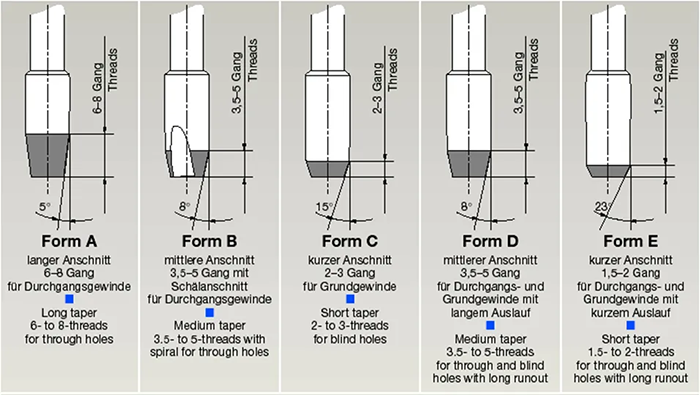
As a general reference, Form B typically has a chamfer length of around 3.5–5 threads, while Form C typically has a shorter chamfer of around 2–3 threads. These ranges may vary depending on the manufacturer and tap specification.
A shorter chamfer allows the tap to produce full threads closer to the bottom of a blind hole, where tapping depth is limited.
It is also important to distinguish chamfer form from flute or point design. Spiral point, straight flute, and spiral flute describe how the tap cuts and handles chips. They are different features, not alternative names for Form B and Form C.
Form B: Why Is It Commonly Used for Through Holes?
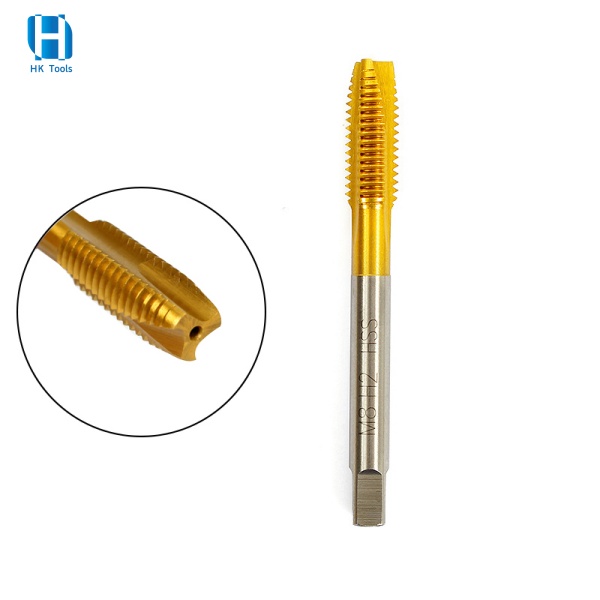
Form B has a relatively long chamfer and is commonly available with a spiral point, also known as a gun point.
The spiral point directs chips forward, away from the cutting area. In a through hole, chips can pass through the workpiece and exit from the opposite side, reducing chip accumulation around the cutting edges.
This makes a spiral-point Form B tap a common choice for efficient production tapping in through holes.
The two features serve different purposes:
▪Form B: A relatively long chamfer.
▪Spiral point: Directs chips forward.
Together, they make a practical combination for many through-hole applications.
Form C: Why Is It Commonly Used for Blind Holes?
Form C has a shorter chamfer, allowing full threads to start closer to the cutting end. This is useful for blind holes, where the available tapping depth is limited and the required thread depth needs to be achieved without leaving excessive unthreaded space at the bottom.
Chip evacuation is another important consideration. Since chips cannot exit through the bottom of a blind hole, the flute design should suit the workpiece material and the type of chips produced.
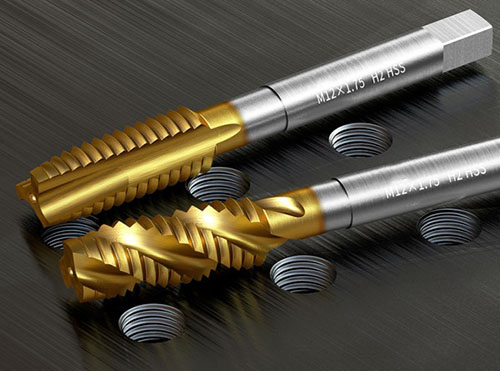
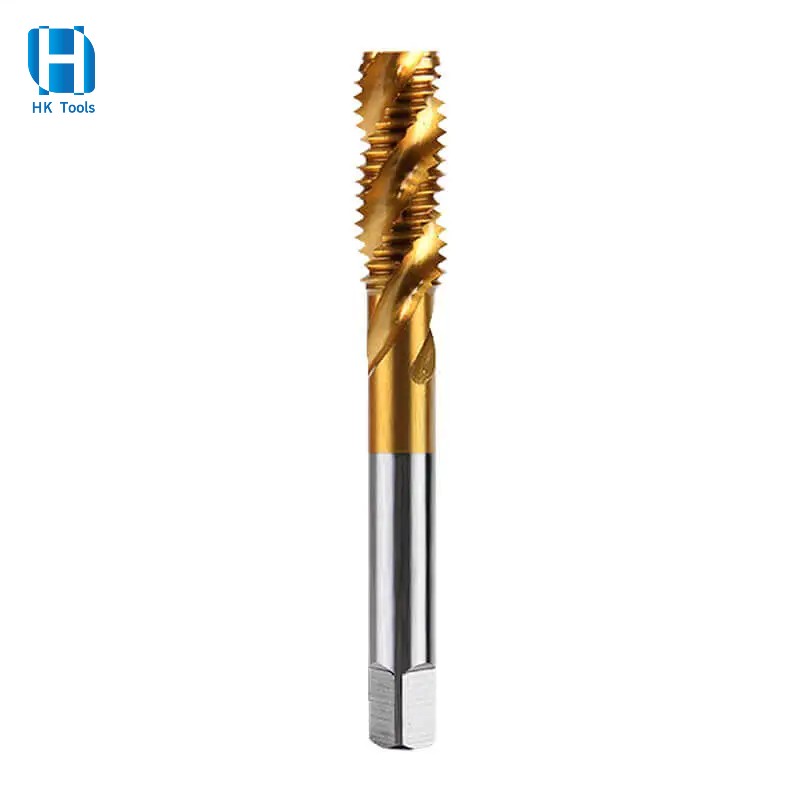
A Form C tap with spiral flutes can help guide chips upward toward the hole opening. This combination is often useful when tapping blind holes in materials that produce long, continuous chips.
The two features are distinct:
▪Form C: A shorter chamfer.
▪Spiral flute: Helps carry chips toward the hole opening.
Form C Does Not Always Mean Spiral Flute
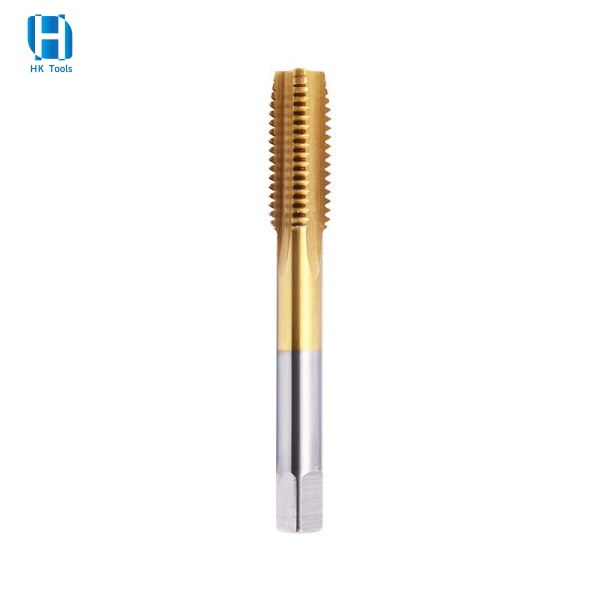
Form C does not automatically mean that a tap has spiral flutes. Form C taps can also have straight flutes, depending on the design and intended application.
Straight-flute taps may be suitable for materials that produce short, manageable chips or for applications where their design is appropriate. Spiral-flute taps are often preferred for blind holes when chips need to be pulled toward the hole opening.
When selecting a tap, consider both the chamfer form and the flute design rather than assuming that Form C always means spiral flute.
Form B vs. Form C: Quick Comparison
| Feature | Form B | Form C |
|---|---|---|
| Typical chamfer length | Around 3.5–5 threads | Around 2–3 threads |
| Chamfer | Longer | Shorter |
| Full threads start | Farther from the cutting end | Closer to the cutting end |
| Common application | Through holes | Blind holes |
| Common chip-control design | Spiral point pushes chips forward | Spiral flute can guide chips upward |
Note: Chamfer lengths are general references and may vary by manufacturer and tap specification. Typical applications are guidelines, not absolute rules.
Which One Should You Choose?
As a general starting point:
▪For through holes: A Form B tap with a spiral point is often a suitable choice because chips can be pushed forward and out through the workpiece.
▪For blind holes: Form C is often preferred when full threads are needed close to the bottom. A spiral-flute design can help evacuate chips through the hole opening.
The final choice should also take into account the workpiece material, required thread depth, chip characteristics, tapping conditions, and machine setup.
Final Takeaway
The difference between Form B and Form C is mainly their chamfer geometry. Form B generally has a longer chamfer, while Form C has a shorter one that allows full threads to start closer to the bottom of a blind hole.
Flute and point designs determine how chips are handled. Considering both features helps you choose a machine tap based on the actual application rather than relying on the simple rule that Form B is for through holes and Form C is for blind holes.

Post time: Oct-09-2026


