



HSS Drill Bit Grades: A Simple Guide to M42, M35, M2, 4341 & 4241
When customers inquire about drill bits, many of them simply ask for "HSS". While this is a common and understandable request, HSS (high-speed steel) is not a single material—it includes several different grades, each with its own performance characteristics. Understanding the differences can help you choose the most suitable drill bit for your needs, improving efficiency, tool life, and cost-effectiveness.
High-speed steel is valued for its balance of hardness, toughness, and heat resistance. However, not all HSS grades perform the same under different drilling conditions. Below is a general overview of five commonly used HSS grades—M42, M35, M2, 4341, and 4241—to help you understand their typical applications.
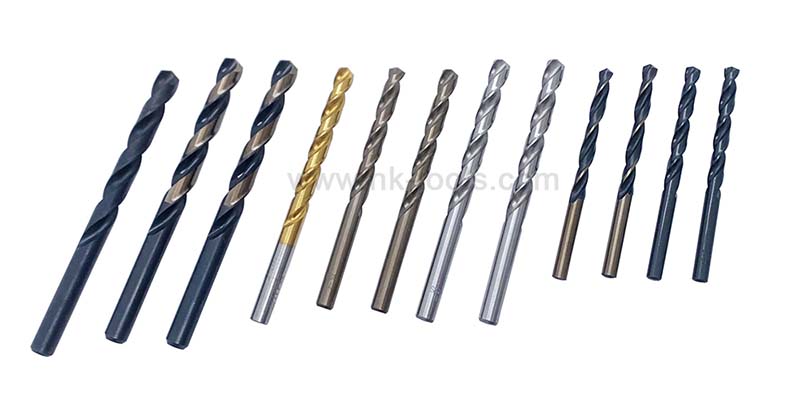
4241: An Economical Choice
HSS4241 is an entry-level HSS material, suitable for machining soft metals, wood, and mild steel. It is designed to meet basic drilling requirements for general-purpose applications.
This material is typically used for light to medium-duty drilling tasks, such as DIY projects or applications where durability is not a critical factor. In hardware wholesale markets, 4241 drill bits are widely popular due to their excellent cost-performance ratio.
However, 4241 drill bits are not recommended for high-hardness materials such as stainless steel or high-carbon steel. For more demanding or professional applications, higher-grade materials should be considered.
4341: A Versatile All-Round Choice
HSS4341 offers improved performance compared to 4241 and can handle a wider range of materials. It is suitable for drilling soft metals, mild steel, iron, and thin stainless steel sheets.
As a mid-level material option, 4341 strikes a good balance between price and performance. It is a practical choice for users who occasionally drill stainless steel but mainly work with mild steel.
Compared with 4241, 4341 is better suited for workshops that need flexibility across multiple materials. However, for thicker stainless steel or continuous heavy-duty use, more specialized drill bit materials may be required.
M2 (6542): The Standard Professional Choice
M2 high-speed steel (commonly referred to as 6542 in China) is one of the most widely used professional-grade drill bit materials on the market. It is known for its stable performance, good wear resistance, and wide applicability.
M2 drill bits are suitable for a broad range of common metals, including stainless steel, iron, copper, and aluminum alloys. Their durability and reliability are significantly higher than 4241 and 4341, making them a preferred choice for many professional workshops.
Overall, M2 offers an excellent balance between performance and cost, making it ideal for users who require frequent drilling without investing in premium-grade materials.
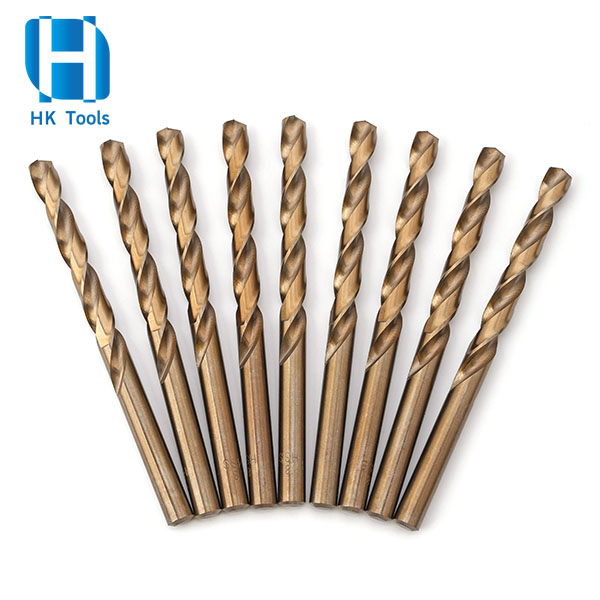
M35 (5% Cobalt): Enhanced Performance Option
M35 is a cobalt alloy high-speed steel containing approximately 5% cobalt. The addition of cobalt significantly improves heat resistance and cutting stability during demanding operations.
This makes M35 drill bits especially suitable for machining difficult-to-cut materials such as stainless steel, cast iron, and alloy steel. Even under high cutting temperatures, M35 drill bits maintain consistent performance and longer tool life.
M35 is a highly cost-effective choice for industrial and professional users who frequently work with stainless steel or other challenging materials.
M42 (8% Cobalt): The Top-Tier Professional Choice
M42 represents the highest performance level among high-speed steel drill bits, with approximately 8% cobalt content. This high cobalt ratio enables outstanding cutting performance under extreme working conditions.
M42 drill bits offer exceptional wear resistance and thermal stability, making them ideal for machining the toughest materials, such as tool steel, hardened stainless steel, and high-temperature alloys. They are widely used in applications where precision, efficiency, and tool life are critical.
Although M42 comes at a higher initial cost, it often delivers superior long-term value in heavy-duty applications by reducing tool change frequency and improving overall productivity.
Each HSS grade is designed for different applications, from basic drilling to demanding industrial use. Understanding these differences helps you choose the right drill bit, improve efficiency, and avoid unnecessary costs. If you’re not sure which grade fits your needs, feel free to contact us for professional advice.
Post time: Jan-04-2026


