



Roughing End Mills: A Practical Guide to Faster Material Removal
When a large amount of material needs to be removed from a workpiece, the roughing stage can have a major impact on machining efficiency. This is where a roughing end mill can be useful.
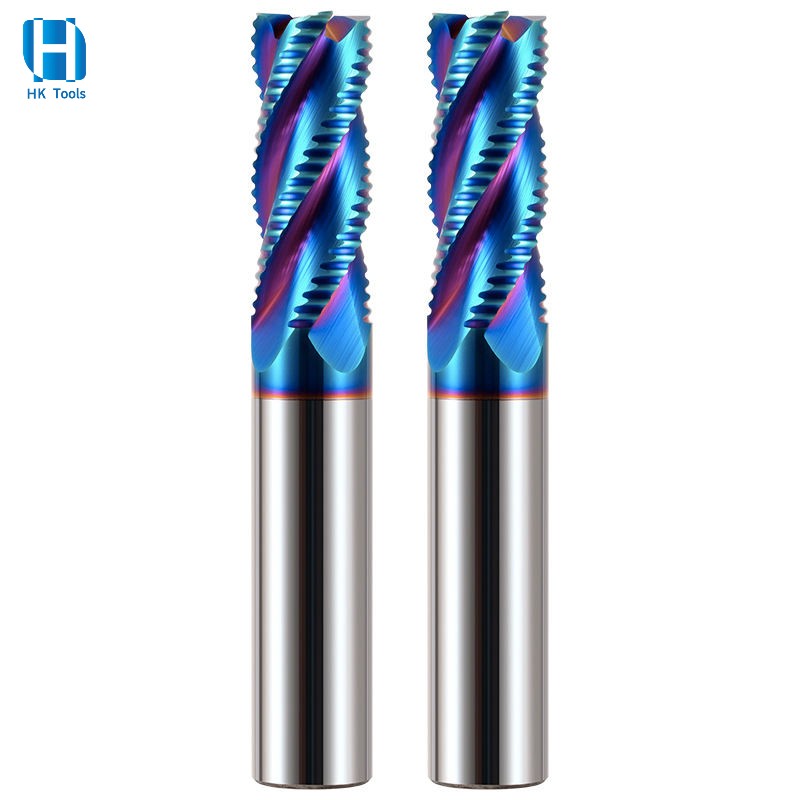
Unlike a standard finishing end mill, a roughing end mill is designed primarily for fast material removal. Its serrated or scalloped cutting edges break chips into smaller segments, helping reduce cutting resistance and improve chip evacuation during heavy milling operations.
Roughing end mills are commonly used for hogging, slotting, pocketing and profiling before a finishing operation. Choosing the right tool, however, depends on factors such as the workpiece material, machine rigidity, cutting depth, flute configuration and required machining performance.
This guide explains how roughing end mills work and what to consider when selecting one for different applications.
What Is a Roughing End Mill?
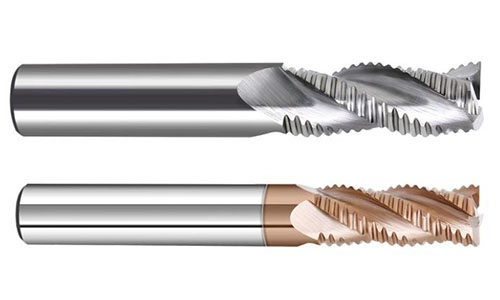
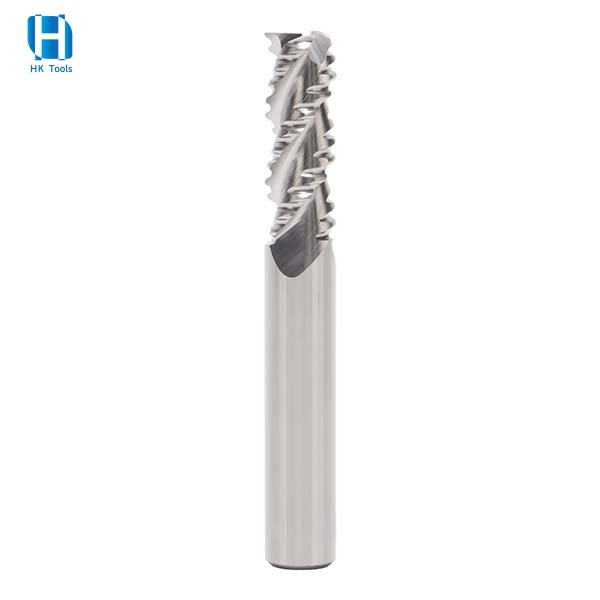
A roughing end mill is a milling cutter with serrated, wavy or scalloped cutting edges. These interruptions divide the cutting edge into a series of smaller teeth and help break the chips produced during machining.
The main purpose of a roughing end mill is to remove a large amount of material efficiently rather than produce a finished surface.
Compared with a conventional finishing end mill, the interrupted cutting edge can help:
▪Break long chips into shorter segments
▪Reduce cutting resistance
▪Improve chip evacuation
▪Allow higher material removal rates in suitable conditions
▪Reduce the tendency for long chips to wrap around the tool
The resulting surface is normally rougher than that produced by a finishing end mill. For this reason, roughing and finishing are often treated as two separate stages of the machining process.
How Do Roughing End Mills Work?
The serrations on a roughing end mill change the way the cutting edge engages with the workpiece. Instead of producing one long continuous chip, the interrupted cutting edge helps divide the chip into smaller pieces.
Chip Breaking
Chip breaking is one of the main advantages of a roughing end mill. Shorter chips are generally easier to evacuate, especially during deep pocketing and slotting operations.
Reduced Cutting Resistance
The interrupted cutting action can help reduce cutting resistance under suitable machining conditions. This can be useful when removing large amounts of material or when machining with a longer tool overhang.
Better Chip Evacuation
Roughing operations can produce a large volume of chips in a short time. Effective chip evacuation is therefore important. Coolant or compressed air can help keep the cutting area clear and reduce the chance of chips being recut.
Roughing End Mills vs. Finishing End Mills
Roughing and finishing end mills are designed for different stages of machining.
| Feature | Roughing End Mill | Finishing End Mill |
|---|---|---|
| Main purpose | Fast material removal | Surface finishing |
| Cutting edge | Serrated or scalloped | Continuous |
| Chip formation | Broken chips | More continuous chips |
| Material removal | High | Moderate |
| Surface finish | Rougher | Smoother |
| Typical use | Hogging, slotting, pocketing | Finishing and final passes |
A roughing end mill brings the workpiece closer to its final dimensions, while a finishing end mill removes the remaining stock and produces the required surface finish.
Using a finishing end mill for heavy stock removal can increase tool wear, while using a roughing end mill for the final pass may leave visible marks on the workpiece.
Types of Roughing End Mills
Roughing end mills are available in different geometries and configurations. The appropriate choice depends on the workpiece material and machining conditions.
Coarse Pitch vs. Fine Pitch
The pitch refers to the spacing between the serrations or cutting edges.
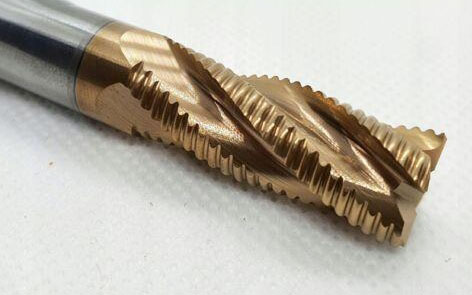
Coarse-pitch roughing end mills have fewer and more widely spaced cutting edges. The larger flute spaces provide more room for chip evacuation and can be useful when removing a large volume of material.
Fine-pitch roughing end mills have more closely spaced cutting edges. The increased number of teeth can distribute the cutting load across more cutting edges and may be suitable for harder materials and certain high-load applications.
The best pitch depends on the material, cutting depth, machine capability and chip evacuation requirements.
Flute Count and Helix Angle
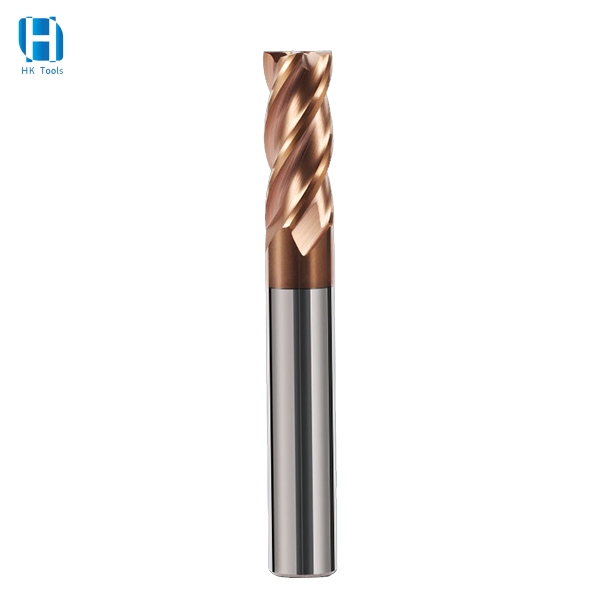
Flute count affects the balance between cutting edges and chip space. Fewer flutes generally provide more room for chip evacuation, while higher flute counts provide more cutting edges.
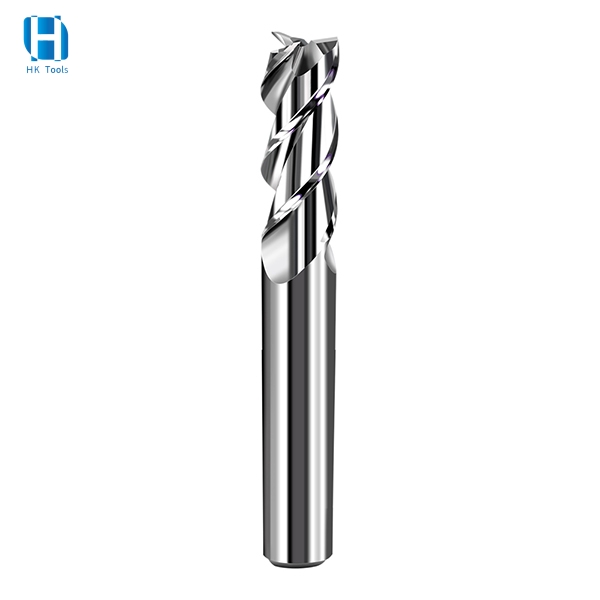
Helix angle also influences cutting performance. Different helix geometries are designed for different materials and machining conditions. For example, aluminum-specific roughing tools may use geometries designed for efficient chip evacuation, while tools for steel may use different combinations of helix angle and core strength.
Flute count and helix angle should therefore be considered together with the overall tool geometry rather than selected independently.
How to Choose the Right Roughing End Mill
Selecting a roughing end mill involves more than choosing the correct diameter. Consider the following factors.
Workpiece Material
Aluminum, carbon steel, stainless steel, titanium and hardened steel have different cutting characteristics. Tool geometry, substrate and coating should be selected according to the material being machined.
Machine Capability
Machine power and rigidity have a direct influence on roughing performance. A rigid machining center with sufficient spindle power can generally support heavier cuts, while a less rigid machine may benefit from a geometry designed to reduce cutting resistance.
Cutting Depth
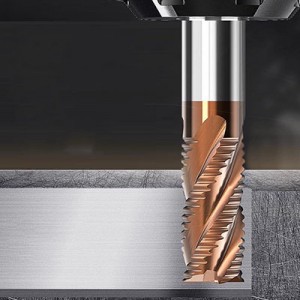
Deep slotting and pocketing require good chip evacuation. When cutting deeply, sufficient flute space and an effective coolant or air-blast system can help prevent chips from accumulating around the tool.
Required Surface Finish
A roughing end mill is designed for material removal rather than final finishing. If a smooth surface is required, leave sufficient stock for a finishing operation and use an appropriate finishing end mill for the final pass.
Applications and Machining Tips
Roughing end mills are commonly used for:
▪Hogging: Removing large amounts of material
▪Slotting: Cutting slots and channels
▪Pocketing: Removing material from enclosed areas
▪Profiling: Roughing around the outside of a workpiece
▪Mold and die machining: Removing bulk material before finishing
▪General CNC milling: Preparing workpieces for subsequent finishing
For better roughing performance, pay particular attention to chip evacuation, tool runout, workholding and cutting parameters.
Keep the cutting area clear of chips using coolant or compressed air. Check tool holding and runout to ensure the cutting edges are loaded consistently. Cutting speed, feed per tooth and depth of cut should be selected according to the tool manufacturer's recommendations and the specific workpiece material.
Good workholding is also important during heavy roughing. Vibration or workpiece movement can affect both tool life and machining accuracy.
Conclusion
Roughing end mills are designed to make the material-removal stage of milling more efficient. Their serrated cutting edges help break chips and can reduce cutting resistance, making them suitable for heavy roughing operations such as hogging, slotting, pocketing and profiling.
When selecting a roughing end mill, consider workpiece material, pitch, flute count, helix angle, tool material, coating, machine rigidity and cutting depth.
For the best results, use the roughing end mill for efficient stock removal and leave the final surface finish to an appropriate finishing tool.
Post time: Sep-30-2026


