



TCT Saw Blades for Wood vs. Aluminum: A Technical Comparison
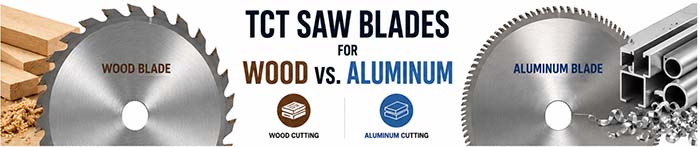
TCT (Tungsten Carbide Tipped) saw blades are widely used for cutting different materials, including wood and aluminum. Although blades designed for these two materials may look similar, they are engineered for different cutting conditions.
The main differences can be found in tooth count, rake angle, tooth grind, and gullet design. Selecting the appropriate blade for the material is important for cut quality, cutting efficiency, blade life, and safe operation.
A common question is whether a TCT saw blade designed for wood can also be used for aluminum. In general, wood and aluminum TCT blades should not be considered interchangeable because their cutting geometries are optimized for different material properties.
Key Design Differences
1. Tooth Count
Tooth count is one of the most visible differences between TCT saw blades for wood and aluminum.
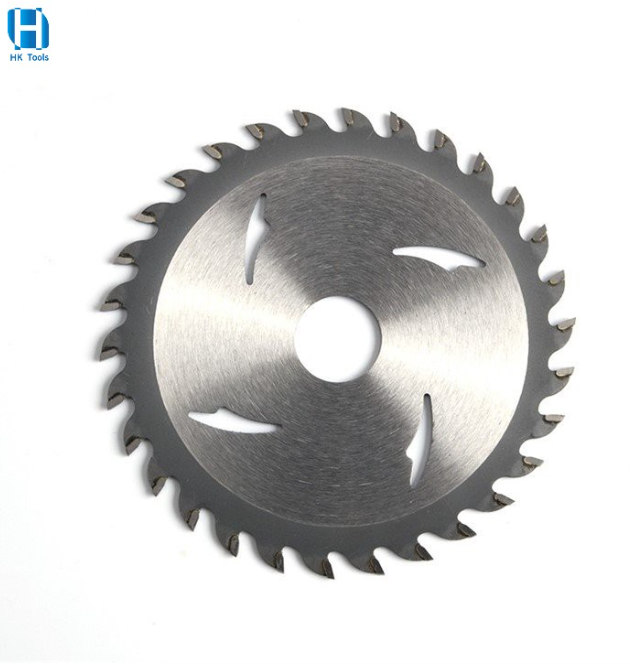
Wood-cutting blades typically feature a low to medium tooth count, generally ranging from 24 to 60 teeth, depending on the blade diameter and application. Fewer teeth allow faster material removal and provide larger spaces between teeth for efficient sawdust evacuation. Lower tooth counts are commonly used for ripping and general-purpose wood cutting, while higher counts within this range can provide smoother crosscuts.
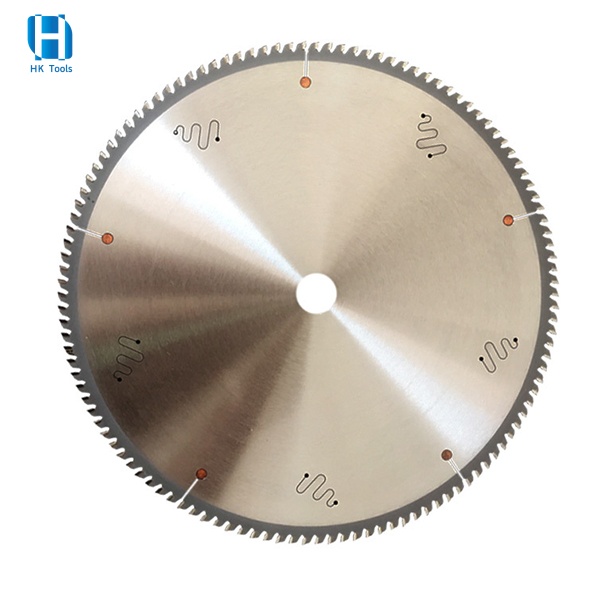
Aluminum-cutting blades generally have a higher tooth count, often 80 to 120 teeth or more, depending on the blade diameter and the type of aluminum being cut. A higher tooth count distributes the cutting load across more teeth and can help produce a cleaner, more controlled cut.
In general, fewer teeth favor faster material removal in wood, while higher tooth counts are commonly used when a finer cut is required in aluminum.
2. Rake (Hook) Angle
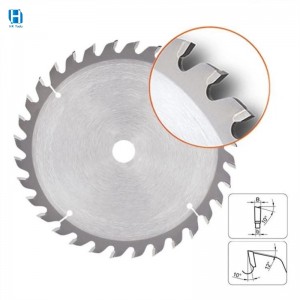
Rake angle is another important design parameter.
Wood-cutting blades generally use a positive rake angle, meaning the teeth lean forward and engage the material more aggressively. This geometry helps the teeth cut efficiently through wood fibers and supports faster material removal.
For aluminum, a neutral or negative rake angle is commonly used. This configuration reduces the aggressiveness of tooth engagement and helps minimize the tendency of the blade to grab or self-feed into the workpiece.
This difference is important because aluminum is a soft and ductile metal with cutting characteristics that differ significantly from wood.
3. Tooth Profile and Grind
The tooth profile is also selected according to the material being cut.
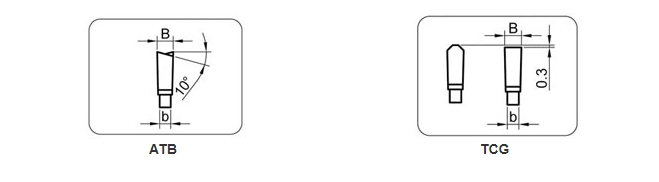
For wood, ATB (Alternate Top Bevel) is one of the most common tooth configurations. The alternating bevel allows the teeth to slice through wood fibers and can provide a clean cutting edge with reduced tear-out.
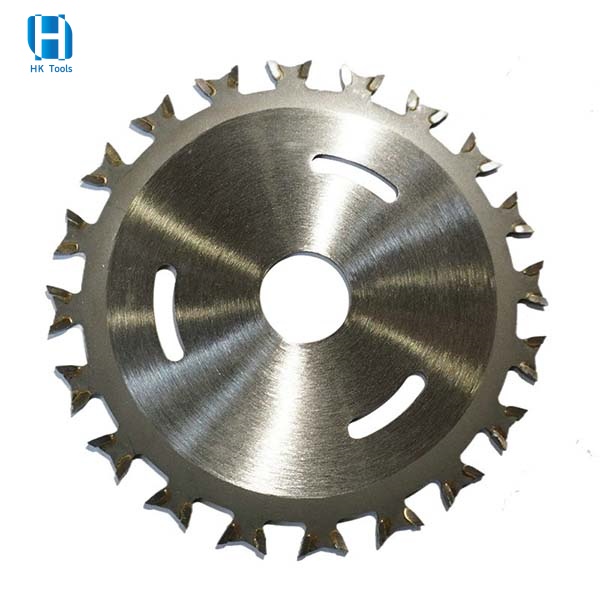
For aluminum, TCG (Triple Chip Grind) is widely used. This design combines chamfered and flat-top teeth in an alternating pattern. The tooth geometry distributes the cutting load and provides a durable cutting edge suitable for aluminum and other non-ferrous metals.
The exact tooth grind may vary depending on the blade manufacturer and the specific cutting application.
4. Gullet Design
The spaces between the teeth, known as gullets, play an important role in chip evacuation.
Wood produces sawdust and relatively small wood chips. Wood-cutting blades therefore use gullet designs that provide sufficient space for efficient dust and chip removal while maintaining the required cutting performance.
Aluminum produces metal chips that can behave differently during cutting. Aluminum-cutting blades are designed with gullets that provide sufficient space for efficient chip evacuation and help reduce chip packing and excessive heat generation.
The appropriate gullet design depends on factors such as blade diameter, tooth count, material thickness, and the specific aluminum application.
Why the Correct Blade Matters
Blade geometry directly affects cutting performance and operating conditions. The correct blade can influence:
▪Cutting speed
▪Surface finish
▪Chip evacuation
▪Heat generation
▪Blade service life
▪Risk of material grabbing or kickback
▪Overall cutting safety
A blade designed for a particular material provides tooth geometry that is better suited to the material's cutting characteristics.
Can a Wood TCT Blade Be Used for Aluminum?
It is generally not recommended to use a standard wood-cutting TCT blade for aluminum.
One of the main concerns is the positive rake angle commonly used on wood blades. This geometry can cause the teeth to engage aluminum too aggressively, increasing the possibility of grabbing or kickback.
The tooth count, tooth profile, and gullet design may also be unsuitable for aluminum cutting. Depending on the specific blade and cutting conditions, this can result in excessive heat, accelerated tooth wear, poor chip evacuation, or unsatisfactory surface finish.
For regular aluminum cutting, a TCT blade specifically designed for aluminum or other non-ferrous metals is generally recommended.
How to Choose the Right TCT Saw Blade
When selecting a TCT saw blade, consider the following factors:
1. Identify the Material: Determine whether the application involves solid wood, plywood, MDF, aluminum profiles, aluminum sheets, or another material. Different materials may require different tooth geometries.
2. Check Blade Diameter and Bore: Make sure the blade diameter and bore size are compatible with the saw and that the blade is suitable for the machine's operating requirements.
3. Select the Appropriate Tooth Count: Choose the tooth count according to the required balance between cutting speed and surface finish. Lower tooth counts generally favor faster material removal, while higher tooth counts are commonly used for finer cuts.
4. Examine Tooth Geometry: Check the rake angle and tooth grind. Positive rake angles and ATB profiles are commonly associated with wood-cutting applications, while neutral or negative rake angles and TCG profiles are widely used for aluminum.
5. Verify Machine Compatibility: Check the blade's maximum RPM rating, recommended operating conditions, and compatibility with the machine before installation.
Final Considerations
TCT saw blades for wood and aluminum may appear similar, but their cutting geometries are designed around different material characteristics.
Wood blades typically use fewer teeth, positive rake angles, and wood-oriented profiles such as ATB, while aluminum blades generally feature higher tooth counts, neutral or negative rake angles, and profiles such as TCG.
Because these design features affect cutting behavior, wood and aluminum TCT blades should generally be treated as application-specific tools rather than interchangeable products.
For applications involving both wood and aluminum, using dedicated blades for each material is generally recommended to achieve appropriate cutting performance, surface quality, and blade service life.
Post time: Aug-21-2026


