



HSS M2 vs. M35: What Hardness of Mold Steel Can They Machine?
When selecting a high-speed steel cutting tool for mold steel, workpiece hardness is one of the most important factors to consider.
M2 and M35 are both widely used HSS grades, but M35 generally provides better resistance to softening at elevated temperatures. This is mainly due to its approximately 5% cobalt content.
However, neither grade should be considered a dedicated solution for fully hardened mold steel. The hardness ranges below are practical reference guidelines, not absolute limits. Actual tool performance depends on the steel grade, heat treatment, tool geometry, cutting conditions, cooling, and machining method.
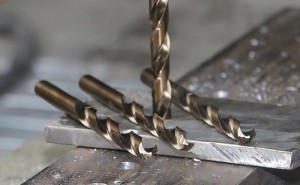
M2 HSS: Practical Hardness Range
M2 (W6Mo5Cr4V2) is a conventional HSS grade without cobalt. It provides a good balance of hardness, toughness, wear resistance, and cost for general machining applications.
•Recommended range: up to around HRC 30
M2 is generally suitable for mold steels at around HRC 30 or below under appropriate cutting conditions. Typical applications include annealed and lower-hardness pre-hardened materials such as P20 and other medium-hardness mold steels.
For drilling, tapping, and other interrupted or friction-intensive operations, conservative cutting parameters and sufficient cooling can help control heat and tool wear.
•Higher hardness: use with caution
M2 can sometimes be used on materials in the HRC 30–36 range for short operations or light cutting, but tool wear and the risk of edge damage increase as hardness rises.
For continuous production, this range should be evaluated carefully rather than treated as a standard operating range.
•Fully hardened mold steel: generally not recommended
When mold steel hardness rises significantly above this range, conventional M2 HSS becomes increasingly unsuitable. Hardened tool steels such as D2, SKD11, and similar materials can cause rapid edge wear, chipping, and excessive heat generation.
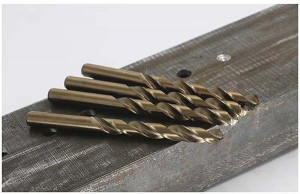
M35 HSS: Extended Hardness Capability
M35 (W6Mo5Cr4V2Co5) contains approximately 5% cobalt. Compared with M2, its cobalt content improves hot hardness and resistance to thermal softening.
M35 is therefore better suited to harder materials and higher-temperature cutting conditions.
•Recommended range: up to around HRC 35
M35 is generally suitable for pre-hardened mold steels at around HRC 35 or below when appropriate cutting parameters are used.
It can be a practical choice for harder mold steels where standard M2 may experience faster wear.
•Higher hardness: use with caution
M35 may still be used for certain short-duration or light-duty operations in the HRC 35–40 range, depending on the material, tool geometry, cutting method, and cooling conditions.
However, this should be regarded as a cautious working range rather than a standard production recommendation. Tool wear becomes increasingly significant as hardness approaches HRC 40.
•Fully hardened mold steel: generally not recommended
M35 is still an HSS grade. Its cobalt content improves its high-temperature performance, but it does not make M35 a hard-cutting material.
For mold steels hardened to approximately HRC 45–50 or higher, carbide, CBN, or other tooling specifically designed for hardened materials is generally more appropriate.
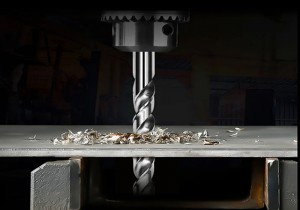
Factors That Affect the Practical Hardness Range
Hardness alone does not determine whether an HSS tool will work successfully. Several other factors can significantly affect tool life and machining stability.
•Tool geometry:Point angle, rake angle, relief angle, edge preparation, and flute geometry all affect cutting forces and heat generation. The appropriate geometry depends on both the workpiece material and the machining operation.
•Tool coating:Suitable coatings such as TiN, TiCN, or other advanced coatings can improve wear resistance and reduce friction under appropriate conditions.However, a coating does not fundamentally change the hardness capability of the HSS substrate. It should be considered an aid to tool performance rather than a way to overcome the basic limitations of HSS.
•Cutting conditions:Higher cutting speeds and aggressive feeds increase heat and cutting forces. When machining harder mold steel, reducing cutting speed and using controlled feed rates can help reduce tool wear.
•Cooling:Effective cooling can help control cutting temperature and improve tool life, particularly during drilling and tapping. The appropriate coolant and delivery method depend on the machining operation and workpiece material.
•Machining method:The practical hardness range can also vary considerably between drilling, tapping, milling, and other cutting operations. A hardness level that is manageable in one application may be unsuitable in another.
Common Misconception
A common misunderstanding is that M35 can machine fully hardened mold steel simply because it contains cobalt. This is not the case. M35 provides better hot hardness and thermal resistance than M2, but it remains a conventional HSS grade. Cobalt improves the performance of the material at elevated temperatures; it does not turn HSS into a dedicated hardened-steel cutting material. For mold steels hardened to HRC 45–50 or above, carbide, CBN, or other tooling designed specifically for hardened materials should generally be considered.
Selection Summary & Final Takeaway
Choose M2 when machining general-purpose and lower-hardness mold steels, particularly around HRC 30 or below. Choose M35 when machining harder pre-hardened mold steels, particularly around HRC 35 or below, or when additional hot-hardness performance is beneficial. For materials in the higher hardness ranges, use conservative cutting parameters and monitor tool wear carefully rather than relying on a fixed hardness limit. For fully hardened mold steel, conventional M2 and M35 are generally not the first choice—carbide, CBN, or other hard-cutting tooling is more appropriate. The exact limit is never determined by hardness alone; tool geometry, cutting conditions, cooling, coating, and machining method all affect the final result.
Post time: Sep-04-2026


